
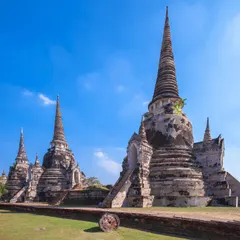
Royal temple of Ayutthaya
Wat Phra Si Sanphet
Private temple of the kings of Ayutthaya on the site of the first palace: three chedis with royal ashes, the ruin of the chapel of 1499 and the empty pedestal of the great gold Buddha melted in 1767.
Ayutthaya, Thailand
Walk Ayutthaya with 31 audio stops narrated by experts. From the three chedis of Wat Phra Si Sanphet to the Buddha head embraced by a fig tree at Wat Mahathat and the prang of Wat Chaiwatthanaram by the river, every temple explains how the capital of Siam lived and fell.
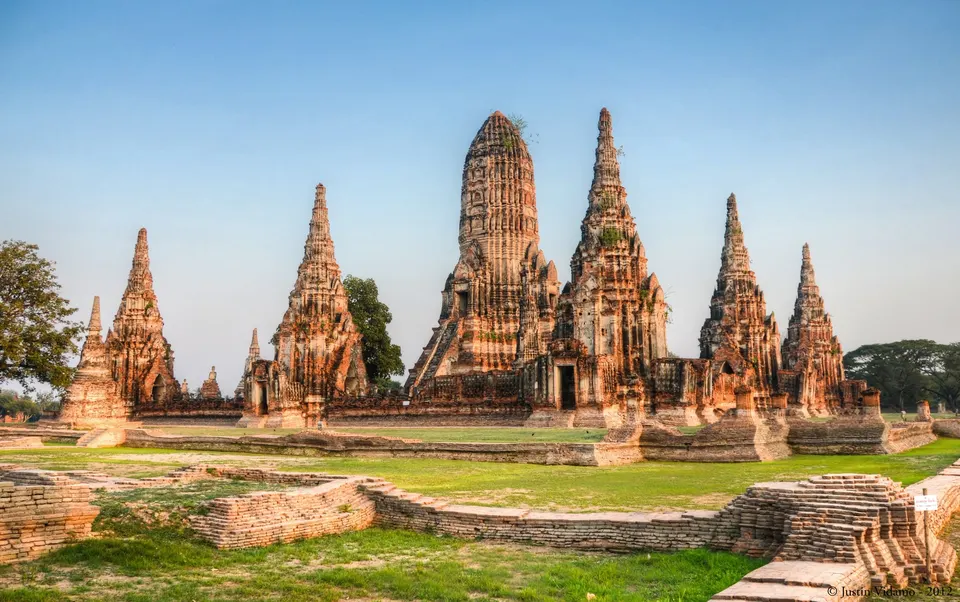
Photo: Justin Vidamo, CC BY 2.0
Royal temple of Ayutthaya
Private temple of the kings of Ayutthaya on the site of the first palace: three chedis with royal ashes, the ruin of the chapel of 1499 and the empty pedestal of the great gold Buddha melted in 1767.
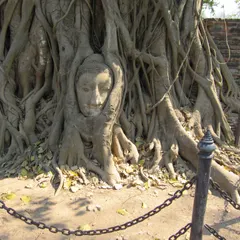
Temple of the Great Relic
Ruins of the royal monastery of Ayutthaya and seat of the Supreme Patriarch: the Buddha head among roots, the Vihara Luang and the empty base of the great prang with its gold crypt.
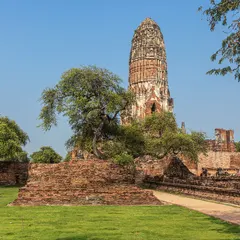
Crypt of the royal gold
Royal temple of Ayutthaya founded in 1424: the best preserved prang on the island, its stucco garudas, the painted three-chamber crypt and the story of the gold looted in 1957.
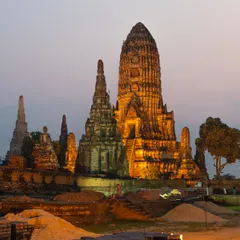
Royal monastery of 1630
Royal monastery of 1630 on the west bank of the Chao Phraya, in Ayutthaya: a 35 m central prang as Mount Meru, eight pyre-shaped towers and a gallery of headless Buddhas.
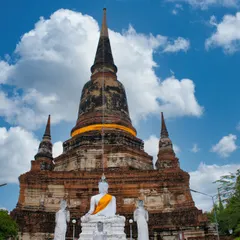
Great Temple of Victory
Living monastery of Ayutthaya with the tallest chedi in the province, tied to Naresuan's victory of 1592: a terrace with a relic chamber, a gallery of seated Buddhas and a 17-metre reclining Buddha.
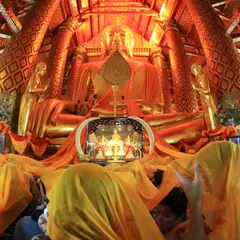
Living temple by the river
Active temple beside the river confluence of Ayutthaya: the 19-metre gilded Buddha Luang Pho To, dated 1324, the Chinese shrine of Princess Soi Dok Mak and an ubosot with a gold Buddha hidden under the stucco.
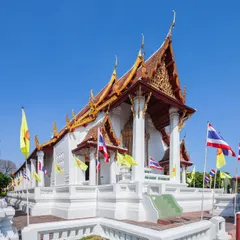
Survivor of 1767
Ayutthaya temple facing the Grand Palace that came almost unscathed out of 1767: an ubosot with a 6-metre crowned Buddha, a gilded pediment of Vishnu and a green stone Buddha of the 7th-9th centuries.
Ayutthaya Audio Guide
In the centre of Ayutthaya island, Wat Phra Si Sanphet was the private chapel of the kings: a temple with no resident monks, raised on the site of the first palace, with three chedis in a row holding royal ashes and, in front of them, the empty pedestal of a 16-metre standing Buddha covered in gold that the sack of 1767 left as a lump of bronze. Very close by, Wat Mahathat, the monastery of the Great Relic and seat of the Supreme Patriarch, twice lost its 50-metre prang and is now famous for a Buddha head that a sacred fig tree wraps in its roots. Across the street, Wat Ratchaburana was founded in 1424 where two princes died in a duel on elephant back, and its prang, the best preserved on the island, hid a crypt with more than 100 kilos of gold that looters broke open in 1957. On the west bank of the Chao Phraya, Wat Chaiwatthanaram revived the Khmer temple-mountain in 1630: a 35-metre prang like Mount Meru, ringed by eight towers. Facing the Grand Palace, across the Khlong Sa Bua, Wat Na Phra Men is one of the few temples that keep their great ubosot and a 6-metre crowned Buddha intact. And off the island, Wat Phanan Choeng holds, at the confluence of the Chao Phraya and the Pa Sak, a 19-metre seated Buddha dated to 1324, before the city existed, while the monks of Wat Yai Chai Mongkhon once more file down in procession around the chedi that Naresuan raised after his elephant duel of 1592.
With the EarGuide Ayutthaya audio guide, every temple reveals its history through professional narration prepared by guides who know the old capital of Siam inside out. Unlike a free walking tour or a conventional guided visit, you set the pace, the order and the stops. No groups, no timetables, no internet connection.
No internet needed
Download the routes before you head out and explore without using data.
Smart geolocation
The narration starts by itself when you reach the point of interest.
Frequently asked questions
The EarGuide app is free. The Ayutthaya audio guide includes 7 independent routes with about six hours of professional narration spread across 7 temples and 31 audio stops, and it is found inside the app itself.
No. EarGuide works entirely offline. Download the routes over WiFi before you set out and you can use the audio guide with no connection and no data use throughout your tour of Ayutthaya. The map shows your GPS position in real time even without coverage.
The Ayutthaya audio guide is available in Spanish and English, with professional narration prepared by guides and experts in the history of Ayutthaya and the old kingdom of Siam.
The audio guide brings together 7 independent routes with about six hours of narration in total, from 30 to 60 minutes per route. They are designed to be spread over one or two days: you can do them separately or string together the ones that lie close, such as Wat Mahathat and Wat Ratchaburana, a street apart, in a single outing.
They are different experiences. The EarGuide audio guide lets you explore Ayutthaya without timetables or groups, pause and resume whenever you like, and replay any explanation as often as you need. It suits independent travellers, families and anyone who prefers to understand the city at their own pace, with no prior knowledge of Thailand.
The Ayutthaya audio guide covers 7 temples: Wat Phra Si Sanphet, Wat Mahathat, Wat Ratchaburana, Wat Chaiwatthanaram, Wat Yai Chai Mongkhon, Wat Phanan Choeng and Wat Na Phra Men, with stops that range from the three royal chedis to the Buddha head in the fig tree, the gold crypt of Wat Ratchaburana and the great seated Buddha by the river.
Only in part. Wat Phra Si Sanphet, Wat Mahathat, Wat Ratchaburana and Wat Na Phra Men lie less than 1 km from one another in a straight line, in the centre of the island and beside it. Wat Chaiwatthanaram is about 2 km to the southwest, on the other bank of the Chao Phraya, and Wat Phanan Choeng and Wat Yai Chai Mongkhon, to the southeast, are between 2.5 and 4 km from Wat Phra Si Sanphet, so for those it is best to go by bicycle, tuk-tuk or taxi.
Yes. Purchases belong to your EarGuide account, not to one app or one phone. A city unlocked in the EarGuide app is also unlocked in that city's own app, and the other way round, on both iPhone and Android. Just sign in with the same account on the other device. The store's “restore purchases” button only covers the app the purchase was made in, so signing in is what carries it across.
The Ayutthaya audio guide is inside the EarGuide app, free and ready to use offline. Carry it in your pocket and explore the old capital at your own pace.
Coming soonMore destinations
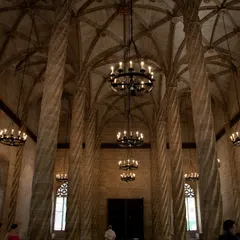
From the City of Arts and Sciences to the Carmen neighbourhood. Discover 2,000 years of Valencian history with audio guides.
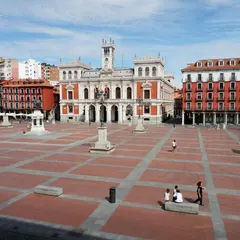
From the Plaza Mayor that inspired Madrid to the house where Cervantes wrote Don Quixote. Discover the former capital of the court of Philip III with audio guides.
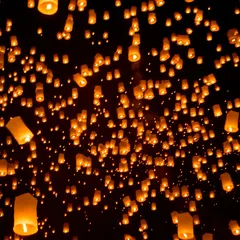
From the sacred mountain of Doi Suthep to the market built over the royal cemetery. Explore the old capital of the Lanna kingdom with audio guides.

From the Art Nouveau town reborn out of the 1904 fire to a wooden lighthouse on the edge of the Atlantic. Explore Ålesund and its islands with audio guides.

From the Templar castle where a pope refused to stop being one to the range this coast deliberately left wild. Explore the walled town of the Papa Luna with audio guides.
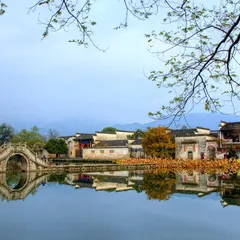
From a half-moon pond over a spring to the gilded mansion of a salt merchant. Explore the Wang clan's village, shaped by water, with audio guides.

From the stilt houses of Hongyadong to the train that crosses a building at Liziba. Explore the mountain city of the Yangtze and the Jialing with audio guides.
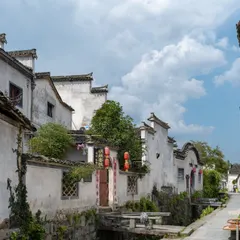
From the stone archway the clan nearly turned into lime to the corner a prefect gave up to the street. Explore the Hu clan's village, in Huizhou, with audio guides.
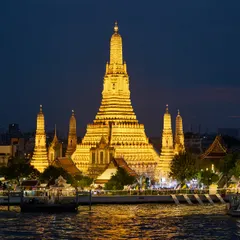
From the Emerald Buddha dressed in gold for each season to the solid gold Buddha hidden beneath stucco. Walk old Bangkok, from Rattanakosin to Chinatown and Thonburi, with audio guides.
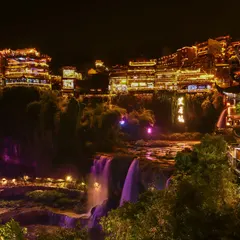
From the waterfall that splits the town in two to the bronze pillar that sealed a peace in 940. Explore old Wangcun, hanging over the You River, with audio guides.
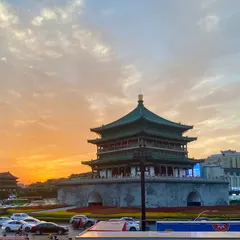
From the Ming wall that still closes the city to the clay soldiers farmers found digging a well in 1974. Old Chang'an, with audio guides.
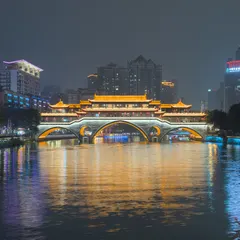
From the tomb mound of Liu Bei that nobody has opened to the nurseries of the giant pandas. Explore the capital of Sichuan, its temples and its teahouses, with audio guides.
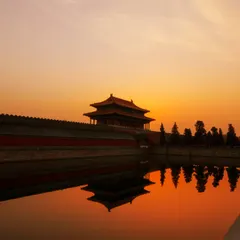
From the throne of the Forbidden City to the battlements of Mutianyu and the hill where the last Ming emperor hanged himself. Six centuries of imperial capital, with audio guides.
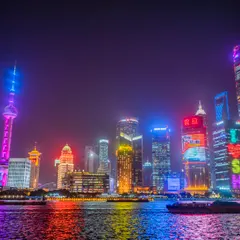
From the waterfront of banks and customs house raised by the foreign concessions to the eleven-sphere tower that founded Pudong. Shanghai district by district, with audio guides.

From the bronze Deng Xiaoping striding south to a liner stranded on land and the village that copied Mona Lisas on an assembly line. The city of reform, with audio guides.
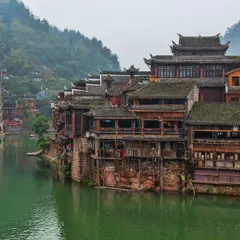
Timber stilt houses hanging over the Tuo River, a red sandstone wall and a bridge from 1670 that was market, road and market again. Old Fenghuang, with audio guides.
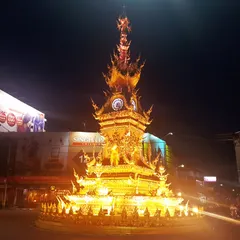
From the white temple a painter rebuilds at his own expense to the bank where Thailand, Myanmar and Laos face one another. Chiang Rai and its artists, with audio guides.

From the Li River of the 20-yuan note to the arch of Moon Hill and the stone bridges of the Yulong. The karst of southern China, with audio guides.
We are working to bring EarGuide to more cities. Where do you want to discover culture?